Universities & Ways of Learning
Discover a three-stage learning experience, from preparation before departure to classroom discussion and reflection afterwards.
Learning before, during and after a visit
A university visit becomes more useful when a learner arrives with questions and has time afterwards to make sense of what they encountered. HT Perspective's UK study tour materials connect campus exploration with interdisciplinary classroom learning, discussion and a personal piece of work.
The programme introduces ways of learning associated with lectures, seminars and small-group discussion. Reading, independent enquiry, explaining a position and listening to other viewpoints are part of that picture. The aim is to help students explore both an academic interest and how they like to learn.
A three-stage learning journey
- Prepare before departure. The programme guide describes two to four online preparation sessions introducing British education, the universities to be visited and the cultural settings along the route. Learners also consider the work they would like to develop: a video, photographs, a reflective essay, a visit report or a portfolio.
- Observe, discuss and record. During the programme, guided tasks connect university visits and city exploration with active enquiry. Examples include observing campus culture, exploring subject choices, group discussion, interviews and a daily reflection journal. Three days of immersive classroom learning sit within this wider experience.
- Share and reflect afterwards. The guide describes one or two online follow-up tutorials. Learners organise their material, prepare a presentation or other final output, and receive individual feedback. The resulting work provides a way to revisit the experience and reflect on future interests.
Different kinds of expertise
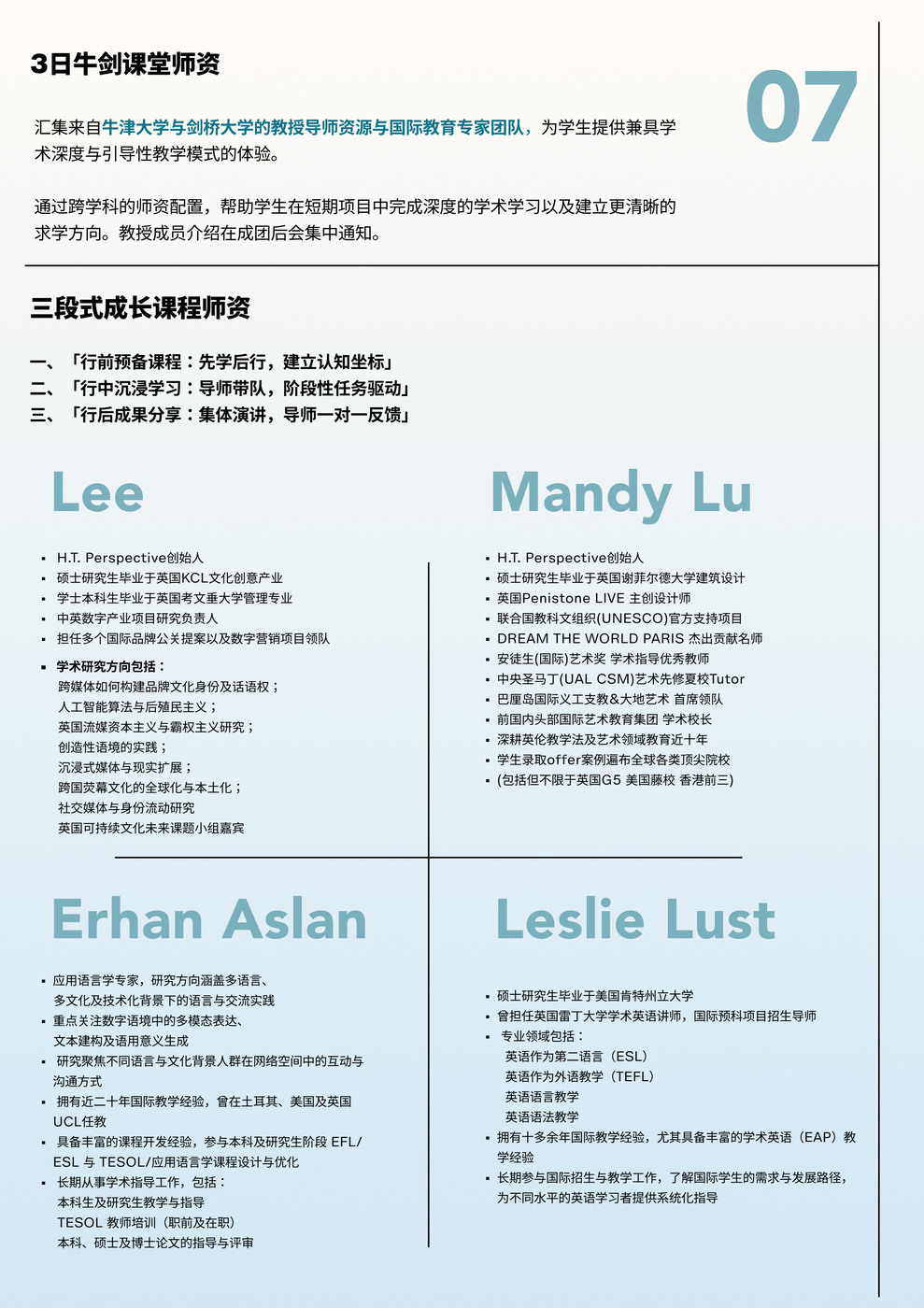
The original learning-support page profiles Lee, Mandy Lu, Erhan Aslan and Leslie Lust. Their described areas of experience span cultural and creative industries, architecture and arts education, applied linguistics, and academic English. This breadth supports the programme's interest in connecting subjects and forms of expression.
Specific teaching assignments are confirmed after a group is formed. Across the three stages, the learning focus remains on preparing thoughtful questions, engaging with what is encountered and developing a considered response of one’s own.
View the original programme artwork (Chinese)