Museums & City Culture
Explore the connections between culture, art and everyday life, from museums and galleries to city neighbourhoods.
Looking at London through its collections
HT Perspective's museum and city-culture pages bring together six places that offer different ways to connect knowledge with close observation. History, natural science, painting, design and contemporary art become starting points for discussion about how people understand and shape the world.
History, science and painting
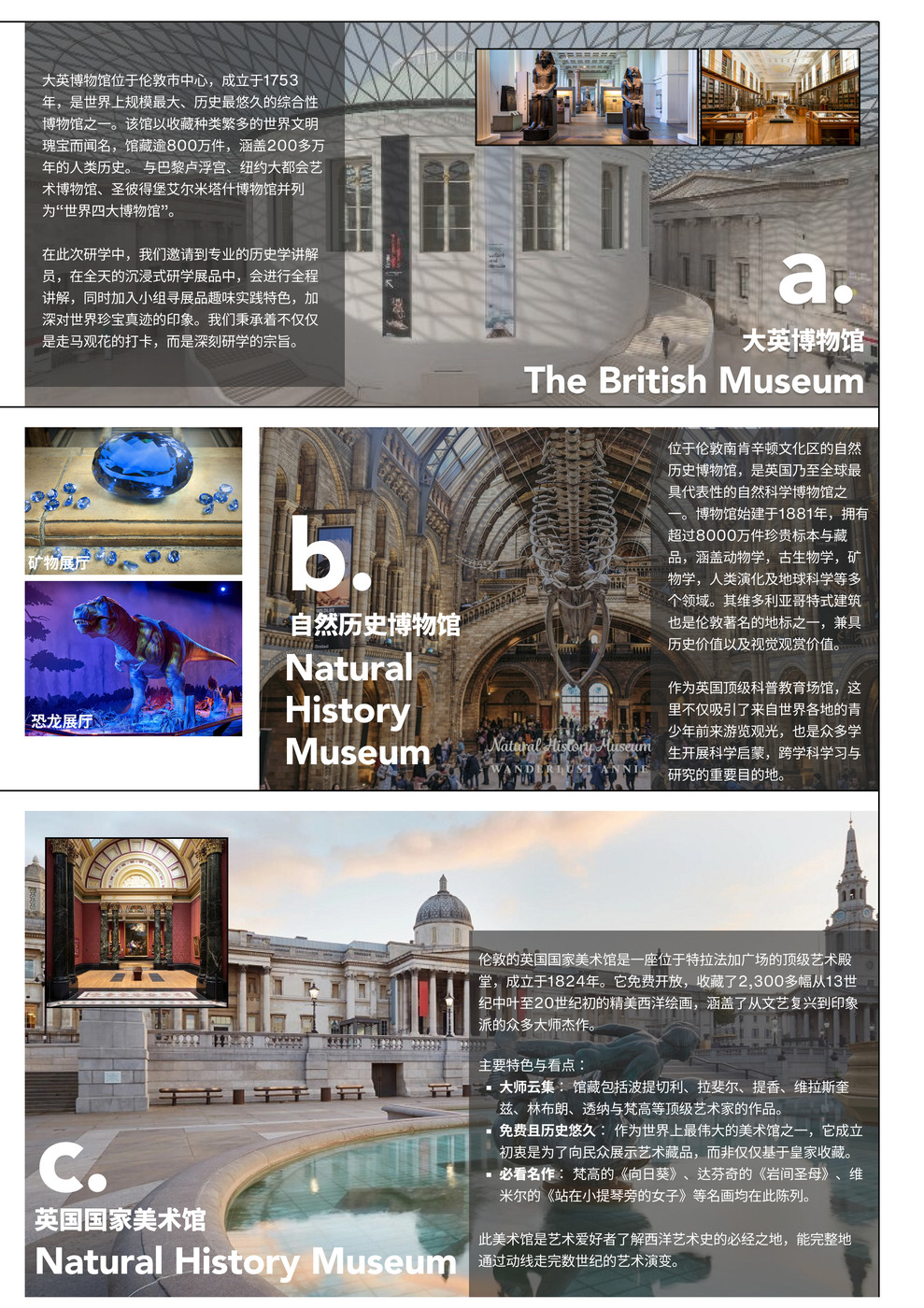
- The British Museum. The original material focuses on objects from different civilisations and periods of human history. It describes a guided learning visit with historical explanation and small-group activities, encouraging students to spend time with the exhibits and consider their context.
- The Natural History Museum. This section connects zoology, palaeontology, minerals, human evolution and earth science. The building itself is also part of the visual experience. The page presents the museum as a setting for scientific curiosity and for making connections across subjects.
- The National Gallery. The source introduces European painting through a broad historical sequence, from the Renaissance to later movements. It highlights artists such as Botticelli, Raphael, Titian, Rembrandt, Turner and Van Gogh as reference points for exploring changes in artistic expression. The setting is the National Gallery in Trafalgar Square.
Design, British art and contemporary spaces
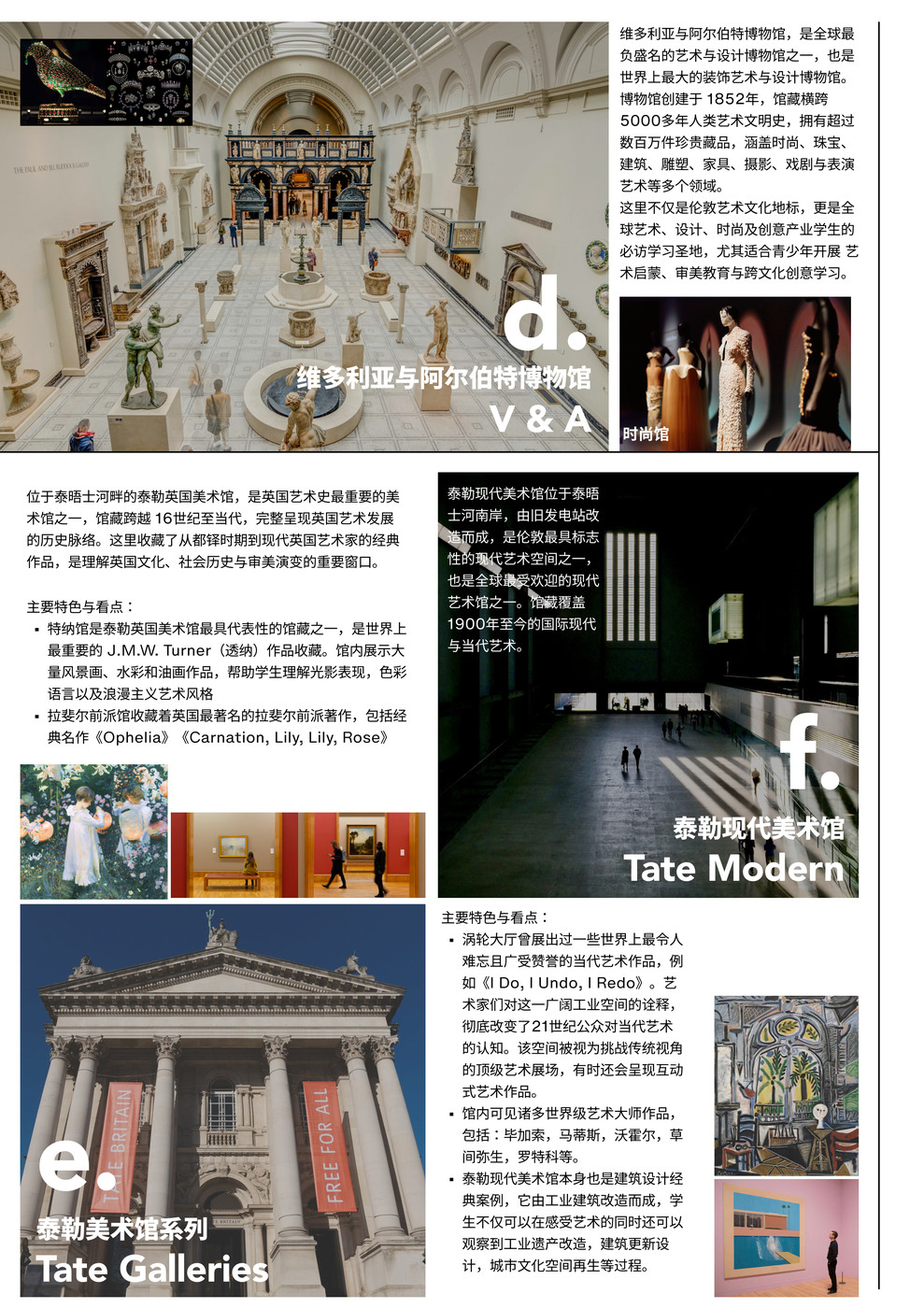
- The Victoria and Albert Museum. Fashion, jewellery, furniture, photography, sculpture and performance are among the areas introduced. The learning emphasis is on visual observation, design and the relationship between creative work and cultural life.
- Tate Britain. The original page uses British painting, including Turner's work, to explore landscape, light, colour and changing artistic approaches. It connects looking at art with understanding social and cultural history.
- Tate Modern. Contemporary art is considered alongside the building's former industrial use. The Turbine Hall and the transformation of a power station into an art space offer ways to think about scale, architecture, industrial heritage and the reuse of urban space.
Together, these settings broaden the idea of a classroom: an object, a painting or a building can become something to examine and discuss. The pages are a thematic introduction to possible learning settings, rather than confirmation that every venue or artwork will form part of every programme. Visits and activities follow the confirmed itinerary.
View the original programme artwork (Chinese)